Physical Address
304 North Cardinal St.
Dorchester Center, MA 02124
Physical Address
304 North Cardinal St.
Dorchester Center, MA 02124

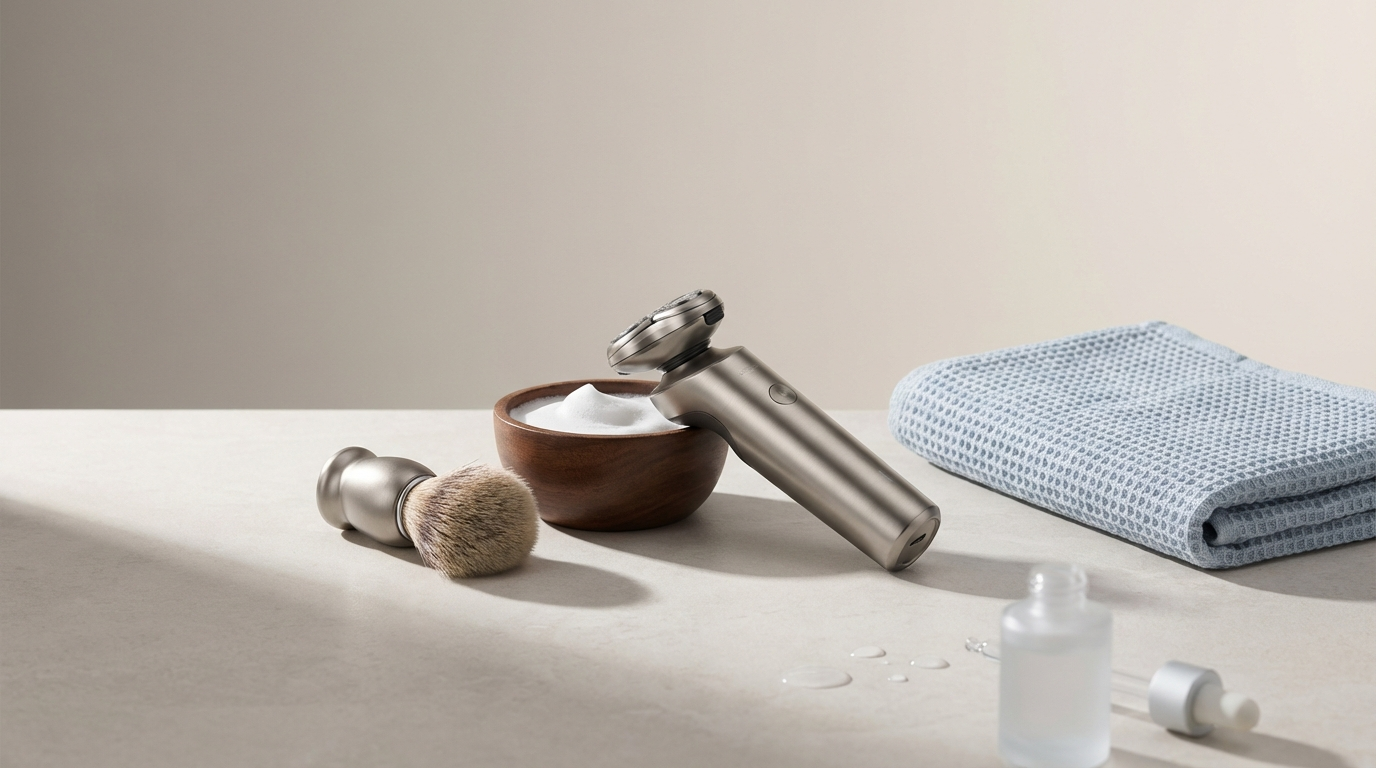
Razor burn is frustrating. Redness, irritation, and that tight stinging feeling a few hours after shaving. And what surprises most people is this: electric shavers can absolutely cause razor burn too.
While electric razors are generally gentler than manual blades, improper technique, dull blades, or the wrong shaving method can still irritate your skin. Luckily, razor burn from an electric shaver is almost always preventable.
If you’re still trying to find the right tool for your skin type, our Best Electric Shaver Guide breaks down the top options for different beard types and sensitivity levels.
If you’re dealing with irritation after electric shaving, here’s exactly why it happens and how to stop it.
Electric razors don’t scrape the skin the same way traditional blades do, but they can still create friction and inflammation. The most common causes include:
Even small mistakes compound over time. The key is refining your technique and making sure your equipment supports your skin, not works against it. If you’d like to learn more about the fundamentals of shaving with an electric razor, this guide will help!
If you recently switched from a manual razor to an electric shaver, your skin may need 2–3 weeks to adapt. During this transition period, mild irritation is common. Stick with it and avoid switching back and forth.
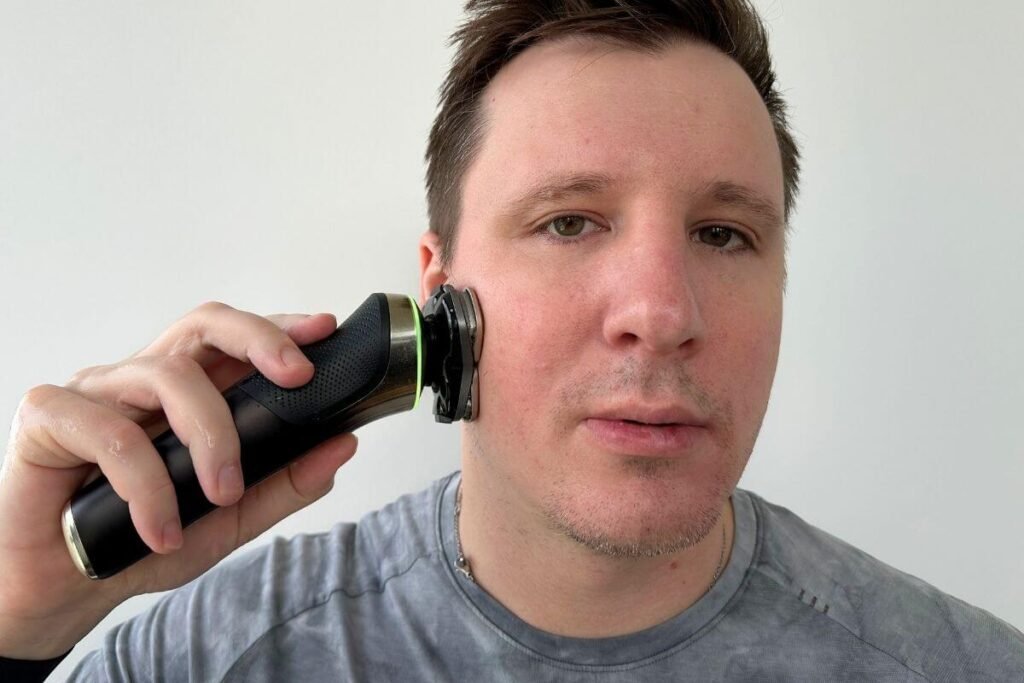
Electric shavers are designed to do the cutting for you. Pressing hard increases friction and heat, which leads to irritation. Use light pressure and let the motor and blades glide naturally over your skin.
Foil shavers work best with straight, back-and-forth strokes.
Rotary shavers perform better with gentle circular motions.
Using the wrong motion can cause unnecessary friction and missed hairs, which leads to repeated passes and irritation.
If you’re unsure which type works best for you, check out our guide on choosing the best electric razor for your skin type.
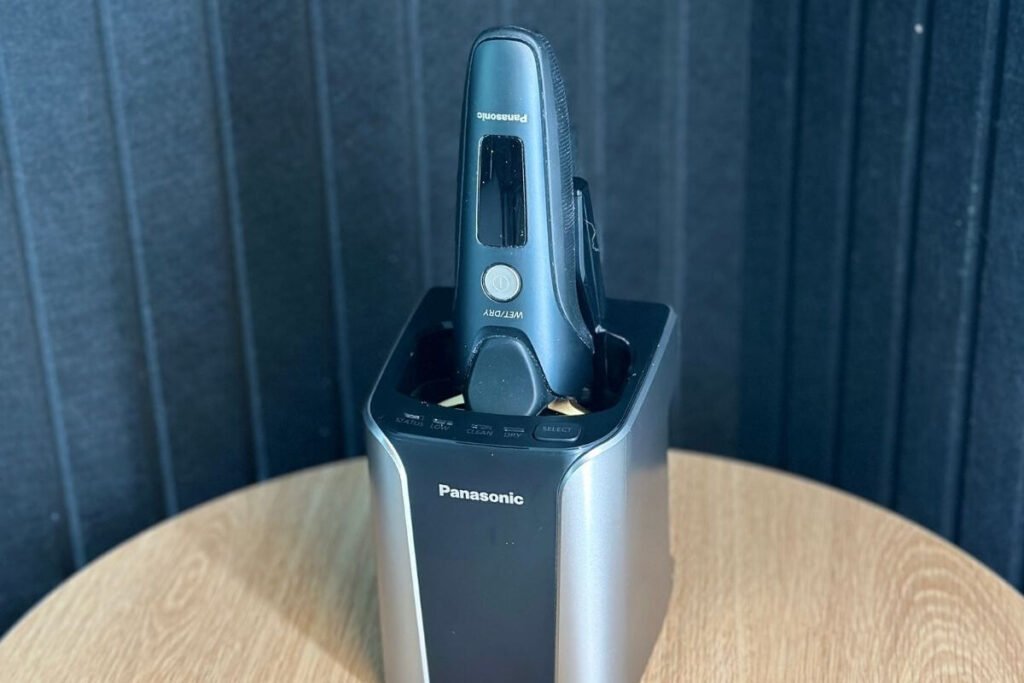
A dirty shaver traps hair, oil, and bacteria. That buildup increases drag and can irritate the skin.
Rinse or brush out your razor after every shave. If your model includes a cleaning station, use it regularly.
Dull blades pull instead of cut. That tugging is one of the biggest contributors to razor burn.
Most manufacturers recommend replacing foil heads or rotary cutters every 12 to 18 months, depending on usage.
Warm water softens facial hair and relaxes the skin. Even if you dry shave, shaving after a shower can reduce resistance and improve comfort.
If your razor supports wet shaving, using shaving cream can add an extra layer of protection.
Pre-shave lotions designed for electric razors help lift hairs and reduce friction. They’re especially helpful if you have oily or sensitive skin.
This small addition can dramatically reduce irritation.
Multiple passes over the same area create heat and friction. Instead, stretch the skin slightly with your free hand and use controlled strokes to capture more hair in fewer passes.
Not all electric shavers feel the same, and the type you use can directly impact irritation levels.
Foil shavers are generally better for sensitive skin and shorter, daily growth. They cut hair using straight back-and-forth strokes and tend to provide a closer shave with controlled, linear movement. Because the motion is more predictable, many people find foil systems gentler on the skin.
Rotary shavers are designed to handle coarse, thick, or uneven growth. Their circular cutting motion adapts well to facial contours, especially around the jaw and neck. However, that circular motion can sometimes create more friction on delicate skin if too much pressure is used.
If razor burn is a recurring issue, switching razor types can make a noticeable difference.
For a deeper breakdown of how each system performs across skin types and beard textures, see our full guide on foil vs rotary electric shavers.
Sometimes irritation isn’t traditional razor burn. It could be:
If redness lasts more than a few days or becomes painful, it may be worth adjusting products or consulting a dermatologist.
Mild razor burn typically resolves within 24 to 48 hours. Avoid shaving over irritated areas until the skin fully calms down.
Applying a fragrance-free moisturizer or aloe vera gel can help speed recovery.
Yes. While they are generally gentler than manual razors, improper technique, dull blades, or excessive pressure can still cause irritation.
Not necessarily. Daily shaving with light pressure and proper technique can actually reduce irritation compared to shaving infrequently with heavy passes.
Only if your razor is designed for wet shaving. If it supports wet use, shaving cream can add comfort and reduce friction.
Neck hair often grows in multiple directions. Shaving against the grain without adjusting your angle can increase irritation. Mapping your hair growth pattern can help.
Razor burn from an electric shaver usually comes down to technique, maintenance, and choosing the right tool for your skin.
Use light pressure. Keep blades sharp. Clean your razor. And match your shaving style to your razor type.
Small adjustments make a big difference.
If you consistently struggle with irritation, upgrading to a razor built specifically for sensitive skin may completely change your experience.