Physical Address
304 North Cardinal St.
Dorchester Center, MA 02124
Physical Address
304 North Cardinal St.
Dorchester Center, MA 02124

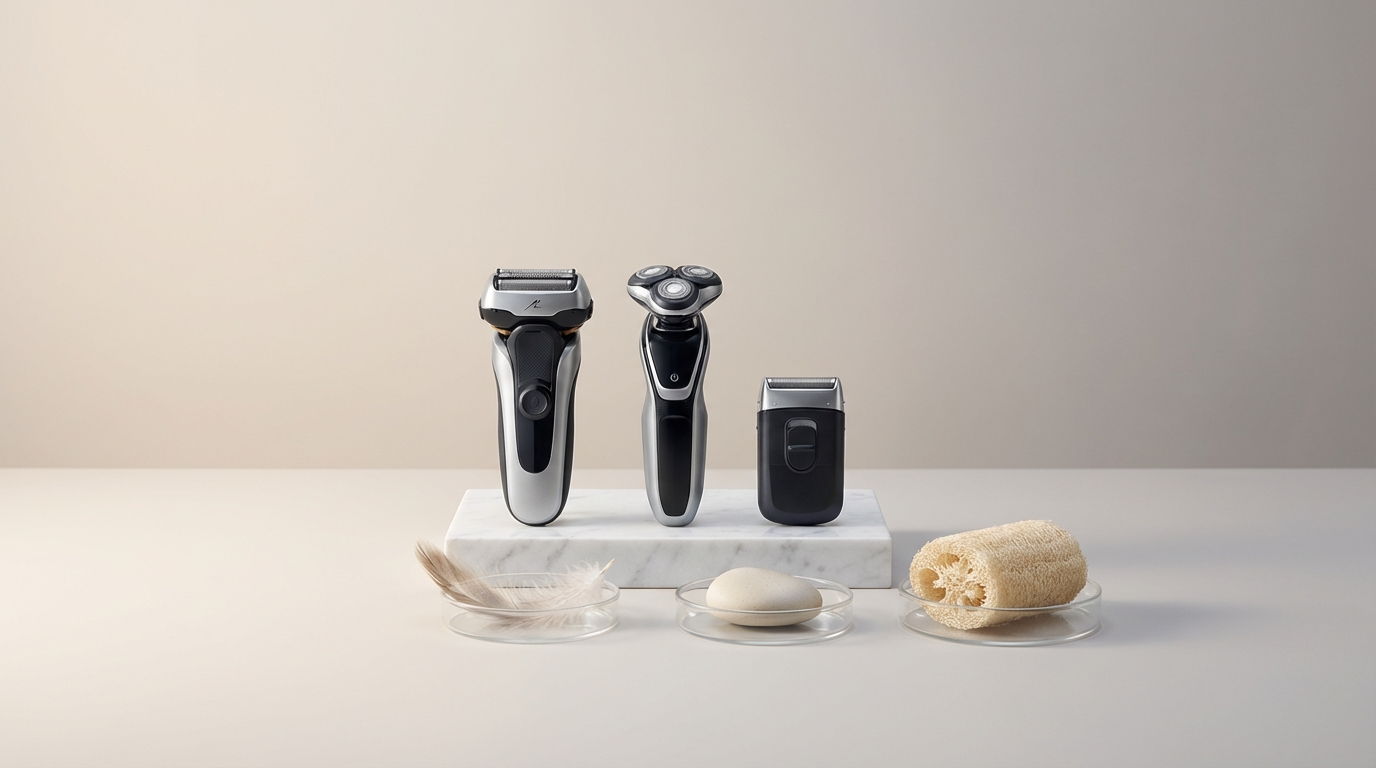
Choosing the right electric shaver for your skin type has less to do with brand names and more to do with how your skin reacts to shaving. Two people can use the same shaver and have completely different results because skin sensitivity, hair thickness, and growth patterns vary widely.
If irritation, redness, or discomfort have been an issue in the past, understanding your skin type is the most important step before choosing a shaver.
Many buyers focus on blade count, price, or marketing claims, but skin response is what determines whether a shaver feels comfortable or causes ongoing irritation. A shaver that works well for one person can perform poorly for another if their skin reacts differently to pressure, heat, or repeated passes.
This is why broad recommendation lists only work when they account for skin type. A good example is our guide to best electric shavers for men, which breaks recommendations down by how different shavers behave on real skin rather than relying on specifications alone.
Sensitive skin is typically prone to redness, burning sensations, and irritation, especially around the neck. This type of skin benefits from shavers that minimize pressure and reduce the number of passes needed to get a clean result.
Comfort-focused designs and flexible cutting systems tend to perform better here. Shaving more frequently with a gentler approach is often easier on sensitive skin than waiting several days between shaves.
If irritation is your main concern, it helps to narrow options to models designed specifically for comfort. Our guide to electric shavers for sensitive skin goes deeper into which designs tend to be the most forgiving.
If shaving rarely causes irritation, you have more flexibility. Normal skin can tolerate a wider range of shaver types and shaving schedules without discomfort.
This is where general recommendations work well, especially when paired with consistent technique. Many users with normal skin do well with the same models featured in our best electric shavers for men guide, since comfort and performance are more balanced.
Oily or acne-prone skin is more affected by hygiene and maintenance than by raw cutting power. Shavers that are easy to clean and do not trap hair or residue tend to perform better.
Dry shaving can help reduce clogged pores for some users, but maintenance matters most. A well-maintained shaver often makes a bigger difference than switching between foil or rotary designs.
Dry skin reacts poorly to excess friction and repeated passes. Comfort and consistency matter more than achieving the closest possible shave.
Daily or near-daily shaving is often easier on dry skin because shorter hair requires less effort to cut. Many users with dry skin find better long-term results by prioritizing comfort over closeness, even if the shave is slightly less aggressive.
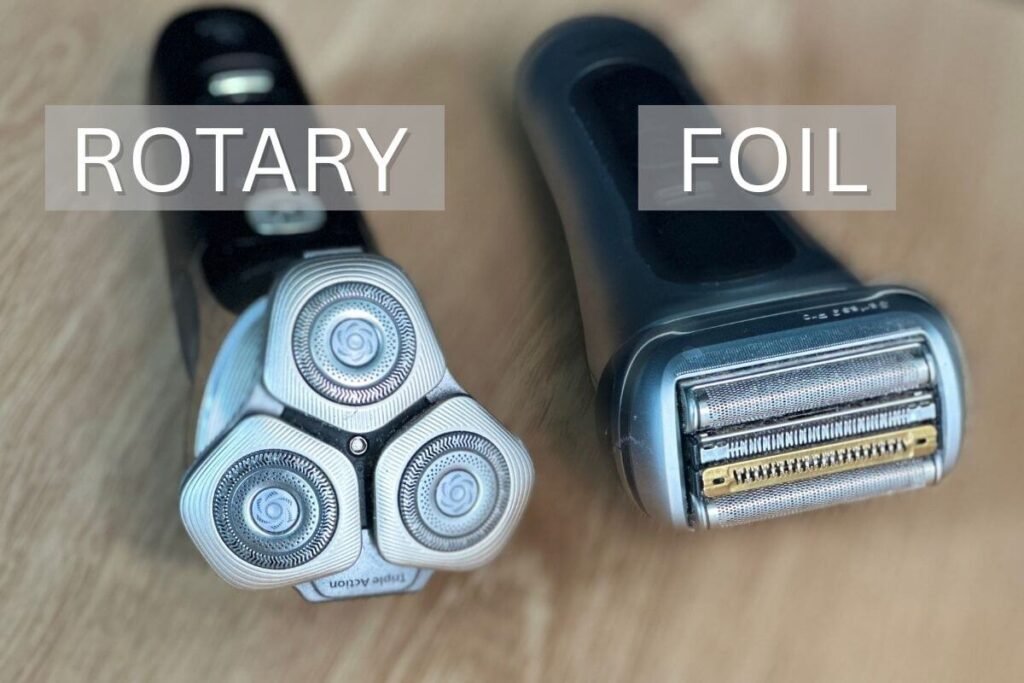
This is where most confusion comes from when choosing an electric shaver.
Foil shavers tend to work best for sensitive skin, predictable growth patterns, and daily shaving routines. They offer controlled cutting that stays close to the skin without excessive movement.
Rotary shavers tend to work better for non-daily shaving and uneven or multi-directional growth. They are more forgiving when hair length varies and can handle longer stubble more comfortably.
If you want a deeper breakdown of how each design behaves, our foil vs rotary electric shavers guide explains the tradeoffs in detail.
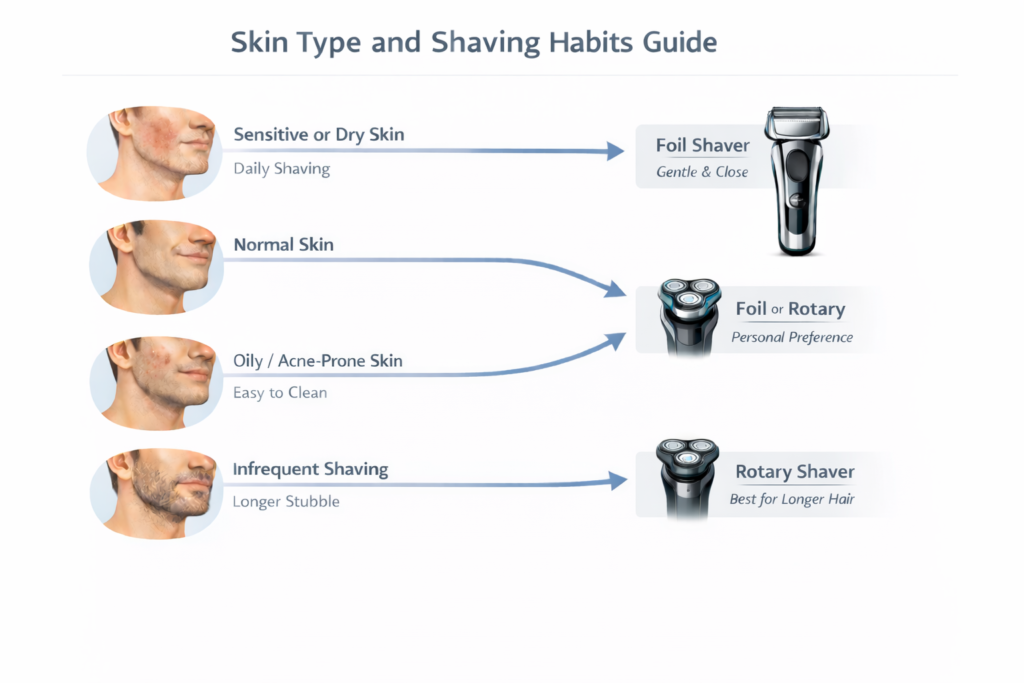
The relationship between skin type, shaving frequency, and shaver design can be easier to understand visually. The diagram below shows how different skin types and shaving habits typically align with foil or rotary shavers, helping narrow the decision quickly.
How often you shave plays a major role in how your skin reacts. Shaving daily keeps hair short and easier to cut, which often reduces pulling and pressure. Shaving every few days requires a shaver that can handle longer hair without tugging.
Matching shaving frequency to your skin type is just as important as choosing the shaver itself, and it often explains why the same model works for one person but not another.
Many people focus exclusively on getting the closest possible shave. Without considering skin tolerance, this often leads to excessive pressure, repeated passes, and irritation.
A slightly less close shave that can be done comfortably and consistently almost always looks better over time than a perfectly close shave that leaves the skin inflamed.
Many people are unsure where they fall, especially if different areas of the face react differently or if shaving habits vary. In these cases, narrowing options manually can feel overwhelming.
This is exactly why we built an electric shaver quiz. It helps narrow recommendations based on skin response, hair type, and shaving habits rather than forcing comparisons between dozens of models.
Skin type, beard density, and shaving habits matter more than brand. Use our quick shaver finder to get a personalized recommendation.
Once skin type and shaving habits are clear, choosing an electric shaver becomes much simpler. Instead of guessing, you eliminate options that are unlikely to work and focus on designs that match how your skin actually behaves.
This approach reduces trial and error and leads to more confident purchasing decisions, especially when paired with a structured resource like our best electric shavers for men guide.
Does skin type really matter when choosing an electric shaver
Yes. Skin type affects how your face reacts to pressure, heat, and repeated passes. A shaver that feels smooth for one person can cause irritation for another if their skin is more sensitive or dry.
Is an electric shaver better for sensitive skin than a manual razor?
For many people, yes. Electric shavers reduce direct blade contact with the skin, which often lowers irritation when used correctly and paired with the right shaving frequency.
Can the wrong electric shaver cause irritation?
Yes. Using a shaver that is too aggressive for your skin type or shaving infrequently with a sensitive setup often leads to redness, burning, and neck irritation.
Should I shave daily if I have sensitive skin?
In many cases, daily or near-daily shaving is easier on sensitive skin because shorter hair requires less pressure to cut. This depends on the shaver design and how your skin responds.
Are foil or rotary shavers better for most skin types?
Foil shavers are usually better for sensitive skin and daily shaving, while rotary shavers tend to work better for non-daily shaving and uneven growth patterns. The best choice depends on both skin type and shaving habits.